
The Seasonal Planning Calendar Every Digital Seller Should Steal
Seasonal products fail for timing, not design
A beautiful Christmas planner published on the first of December will sell a handful of copies. The same file published in September will sell for three months. Etsy needs weeks of impression data to decide where a listing ranks, and Pinterest's lead time is longer still — pins routinely peak forty-five to ninety days after publication. Everything about seasonal selling is set by a calendar you build once and follow every year.
The ninety-day rule
Publish seasonal listings ninety days before the buying peak, and start distributing pins and posts at the same time. That gives search two months to find you and one month of full-price selling. Set a recurring reminder for each season rather than trusting memory: the weeks before a holiday are exactly when you are least able to produce new work calmly.
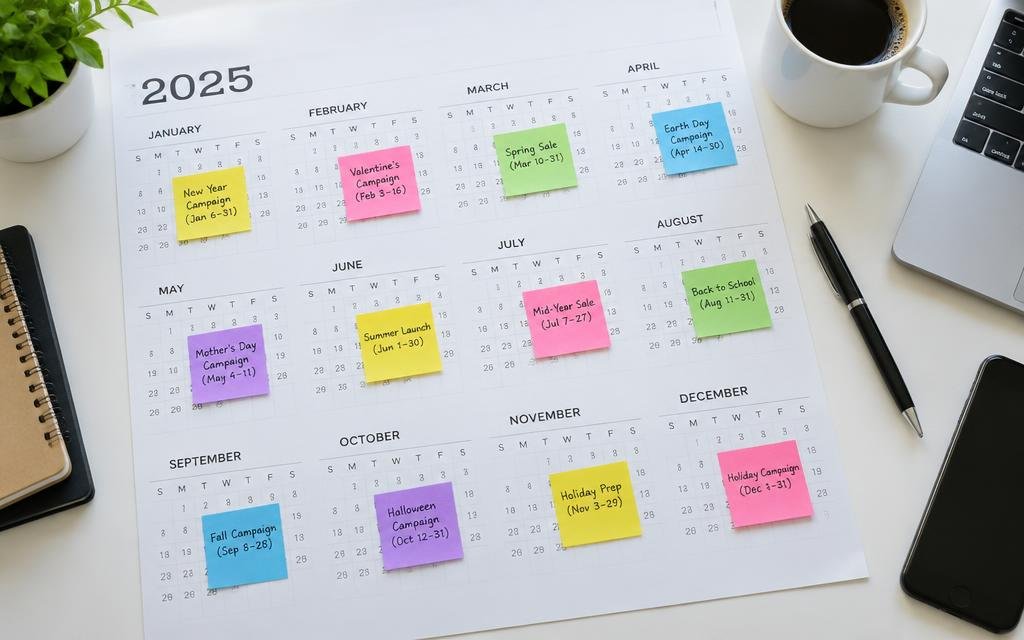
A year at a glance
January: new year planners, budgets, habit trackers, fitness. February: Valentine's, spring cleaning. March–April: Easter, tax season, spring decor. May: Mother's Day, graduation, weddings. June–July: summer activities, travel, teacher planning. August: back to school, homeschool, dorm decor. September: fall decor, Halloween. October: Christmas and holiday launch, gift guides. November: Black Friday bundles, Christmas peak. December: new year products for January.
- Publish 90 days ahead of the peak
- Pin and post from publication day
- Refresh last year's listings rather than rebuilding
- Archive, don't delete, out-of-season items
Refresh beats rebuild
A listing that sold last season carries review count, favourites and ranking history. Update the year in the title and images, refresh the dated pages inside the file, and republish rather than creating a new listing from scratch. You keep the accumulated signals and spend a fraction of the time. Only start fresh when the product concept itself has changed.
Keep evergreen revenue underneath
Seasonal sales are spiky by definition. Underneath them you want undated planners, budget systems, wall art and templates that sell every month. A healthy mix is roughly seventy percent evergreen revenue and thirty percent seasonal; the seasonal spikes then feel like bonuses rather than the only thing keeping the lights on during a quiet March.
Plan production backwards
Work back from the publish date: two weeks for design, one week for mockups and listing copy, a few days for proofreading and test printing. That means starting roughly four months before the peak. Batch similar products together — designing five Halloween items in one week is far faster than one a month, because the research, palette and mockup setup are shared.
Archive rather than delete
When a season ends, move listings into an off-season shop section and remove them from featured slots instead of deleting them. Deleting destroys the ranking history you spent a season building. Some buyers also shop out of season deliberately, particularly for weddings and teacher resources planned a year ahead.
Review each season honestly
Within two weeks of each peak, write down what sold, what did not, what you ran out of time for, and what you would publish earlier next year. Store it with the calendar. This ten-minute habit is the difference between repeating a good year and rediscovering the same lessons annually.
Skip the blank page. Browse the shop for instant downloads.
Browse the shop