
Kettlebell Workout Log Printable: Avoid These Common Mistakes
If you’ve ever printed out a kettlebell workout log printable, you know the feeling: fresh sheet, shiny pen, serious intentions. Maybe you stashed it next to your kettlebells with hope that this time you’ll keep better records. Two weeks later, you’re squinting at a half-filled page, trying to recall if you swung the 14kg or the 20kg last Friday—was it three sets, or four? The handwriting is rushed, the notes look like a secret code, and you’re frustrated because it’s all supposed to help, not make your training fuzzier.
Most people mean well when they print a log, but it’s easy to backslide into scribbles or, worse, abandon the log altogether. You’re not alone if your old logs are half-empty or stuffed in a drawer. The trick is choosing (and actually using) a kettlebell workout log printable that fits your workouts and your real life. Otherwise, you’re just making busywork. If you want your training to progress—even on busy weeks—a reliable, practical log can make a meaningful difference.
Kettlebell Workout Log Printable Mistakes People Make All The Time
If you’ve started, stalled, or simply stared at a blank workout log, you’re in good company. Over the years I’ve seen a lot of logs—and yes, I’ve abandoned more than a few myself. The mistakes tend to be the same, no matter how serious you get. Here are the big ones:
- Not enough detail. It sounds obvious, but jotting down “swings” just isn’t helpful later. Record specifics: 4 sets of 12 swings, with the exact kettlebell weight. For presses and carries, do the same. Don’t rely on memory next month—capture the numbers while you’re still sweating.
- Inconsistent tracking. One workout you write “16kg, 5×10 swings,” next time just “heavy swings,” and the next, nothing at all. A pattern you’d never notice emerges: confusion. It’s hard to progress if you’re not sure what you did.
- Skipping notes on how things felt—or personal bests. Seeing “PB!” or “Felt easy—up weight soon” in old logs is motivating. Even jotting “wrist sore, lighter next week” gives your future self something valuable.
- Letting the log vanish. No judgment, but if your log keeps drifting beneath your mail, or ends up in the laundry, it’s too far away when you need it. Keep it visible and close to your workout space.
- Neglecting to log rest days or skipped sessions. If your log only documents perfect weeks, you’ll miss patterns. Put “missed—travel,” “rest day,” or “short session” in the log. A blank row doesn’t help you learn or adjust.
No system is perfect, but these are the traps that most often turn a kettlebell workout log printable into clutter. The good news: they’re all fixable, usually in a few minutes.
Why Even Use a Kettlebell Workout Log Printable?
If you’re disciplined enough to get through kettlebell workouts on a regular basis, you might wonder if pen and paper really add value. But unless you’ve got an eidetic memory, the details start to blur after a few weeks. This April, I challenged myself to look back at last spring’s workouts—without my log, I wouldn’t have remembered half the weights I used or how my technique felt after a long workday.
Tracking lets you spot trends. For instance, say every Wednesday’s session feels harder: with the log you might notice you always went heavier on Mondays, or didn’t sleep as well midweek. Or maybe you see that you’re stuck at three sets of presses—even though you felt ready to push to four. It’s about more than just numbers: it’s about understanding your training as it unfolds.
A printable log can be brutally honest: it doesn’t sugarcoat skipped days, and it highlights progress. When you can see you pressed the 20kg for 5 reps last summer but now manage 10, you know you’re stronger—even if some days don’t feel it.
How to Make Your Kettlebell Workout Log Printable Work for You
The most effective logs are the ones that are easy to fill out and genuinely useful over time. Some people love fitness apps, but a physical log is right there—no screens, no logins, and no notifications to distract you. It’s hard to ignore a log clipped to your squat rack or taped to the door where you warm up.
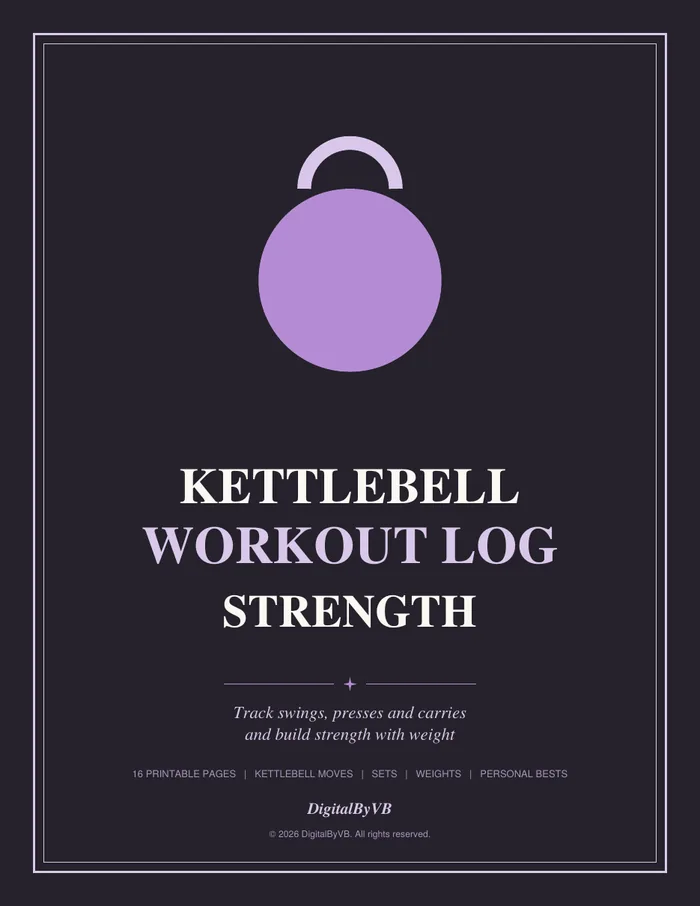
Pick a printable that isn’t cluttered. It should give you enough space for the essentials: movement, sets, reps, weight, and a small spot for notes. The Printable Kettlebell Workout Log from our shop is made just for this. Print it on US Letter or A4 paper—whatever your printer prefers. The columns are clearly labeled for swings, presses, and carries, and there’s a space for jotting down personal bests or quick reminders. It’s not a worksheet for a contest—just a way to keep a real, honest record.
If you’re someone who likes to track on the go, tuck your log in a plastic sleeve with a fine-point Sharpie. I’ve even seen people tape their log to the inside of their home gym door, so it’s impossible to miss after each set. Figure out what fits your space and habits, and the log becomes a tool you use—not just another piece of paper.
Kettlebell Workout Log Printable: What Details to Track?
Some people try to track too much, others too little. Here’s a simple structure that works for most:
- Date. Even a two-digit date works. (E.g., 11/24/26)
- Exercise. List swings, presses, carries—or all three.
- Weight. Always note the exact kettlebell used. If you have a set (8kg, 12kg, 16kg…), make it clear. For carries, note if you used one or two bells.
- Sets and reps (or time for carries). E.g., 3×15 swings, or 4x30sec carry. Be consistent.
- Notes. This is where the real progress shows. “Pressed 18kg for 8 reps—new best!” or “Felt tired, but form good” gives context. Even “Shoulder stiff, stretch after” can help spot long-term trends.
A session might look like this:
- 11/20/26
- Swings: 4×12, 16kg
- Presses: 3×7, 12kg per arm
- Carry: 3x45sec, 14kg
- Notes: “First time carrying 14kg for 45sec. Felt solid, try for 1:00 next.”
It doesn’t matter if you have three minutes or thirty—the log’s job is to let you look back and know exactly what you did.
How To Use Your Printable Log: Step-by-Step
- Print out a fresh kettlebell workout log printable. Use plain paper, and grab a pen or pencil that won’t bleed if sweat gets on the page. Clip the sheet somewhere visible—garage wall, a clipboard, or even just on top of your kettlebell rack.
- Before you start, fill in the date and your planned exercises. For example, if you’re aiming for 5 sets of swings, 3 sets of presses, and a two-handed carry, jot that down before your warmup. This sets your intention and makes it easier to track if your plan changes.
- After each set, record what you actually did. Write down the weight, sets, and reps—or the carry time—immediately. For instance: “Swings, 16kg, 4×10”; “Press, 12kg, 3×8”. If you end up going off-plan, note the change.
- Add a short note after every exercise or at the end of the session. For example: “Presses felt shaky on left—switch to 10kg next time for last set,” or “Swings were easier, add reps next week.” These little details are the ones you’ll appreciate later.
- Mark any personal bests as soon as you hit them. If you carried the 18kg for the longest time yet, star it or jot “PB” so you have a small milestone to celebrate.
- At the end of your workout, check for skipped sets, rest days, or changes. If you cut your session short, note why—”ran out of time,” or “shoulder sore.” This helps you spot when (and why) changes happen.
- Review your entire log sheet each week. Sunday evening is a good time. Look for trends—maybe you felt strong after more sleep, or your wrists get sore every Wednesday. Use this info to adjust your plan, set a goal for the next week, or pat yourself on the back for progress.
- Archive completed sheets. When a page is full, file it somewhere you can find it. Looking back over a few months’ worth of logs is rewarding and can inform your training next season.
Tips for Keeping Your Log Handy (and Not Forgotten)
It might seem trivial, but where and how you keep your kettlebell workout log printable often determines whether you fill it out. If you work out in your basement, put the log on a clipboard hung from a hook; in a small apartment, try taping it to a closet door or slipping it inside a clear page protector (great for sweaty hands). If you’re at a shared gym, keep the log in your gym bag, tucked with a pen. For those who train outdoors, a zip-top bag keeps the log dry and readable.
Set a recurring phone reminder for your typical training hour. If you work Monday, Wednesday, and Friday evenings, set three reminders: “Update your workout log!” It only takes a minute after each session, but it’s easy to forget in the rush to get dinner or wind down. After a few weeks, this step becomes second nature—just like warming up or filling your water bottle before you start.
Checking Progress Without Complicating Your Log
A kettlebell workout log printable is meant to be simple and readable for your future self—not a scrapbook or an art project (unless that motivates you, of course!). Some people try to color-code every movement or add elaborate rating systems, but the power is in the raw, direct information: dates, weights, sets, reps, and honest notes.
Pick one small way to mark special sessions. Say you always train heavy on Thursdays—circle that date. If you set a new personal best, underline the line or put an asterisk. That’s enough to spot trends at a glance, without making your log too busy to use. Remember, a log you can’t understand in 20 seconds probably won’t help you three months from now.
If you want extra motivation, write a mini-goal on top of each page—”Press 16kg for 10 reps by December”—so you see it each session. This keeps your workouts focused and your goals present, without overcomplicating the process.
Concrete Ways to Make Your Kettlebell Log Useful Week After Week
- Only use one page at a time. Filling up a single page before starting the next keeps your progress visible. Resist the urge to print a stack—you’ll just lose track. A single active log outperforms a pile stuffed in a drawer.
- Review your log every Sunday. Take five minutes to ask: Did I hit my targets? Any new aches or PRs? If you notice you skipped more sessions lately, adjust your routine or expectations for the next week. Consistency matters more than perfection.
- Set one or two mini-goals on the log itself. These can be as simple as “Add a set to swings” or “Try 18kg for first set.” Small targets, written where you’ll see them, keep progress steady and measurable.
- Keep your log in plain sight. If it’s hidden, you’ll forget about it. Treat it like your kettlebell shoes—if you see them, you use them.
- Archive filled pages. Even if you only review them every few months, they’ll tell a story—one that’s often more encouraging than you expect.
Frequently asked questions
What should I write in my kettlebell workout log printable?
Stick to the essentials every session: the date, which kettlebell movements you did (swings, presses, carries), the exact weight used, your number of sets and reps (or time for carries), and a short note on how you felt or if you hit a personal best. Consistency is more useful than detail overload—keep your system simple enough to use every time.
How often should I update my kettlebell log?
The best habit is to log your sets right after each exercise, while it’s fresh and you’re still in your workout space. At minimum, fill out the log at the end of each session—don’t wait until you’re showered or back at your desk, or you’ll forget the small but important details.
Can I use the printable log for other exercises?
While the log was designed for kettlebell swings, presses, and carries, you can easily adapt it for similar movements—just write the movement name in the exercise section and fill in the numbers. If you do squats, snatches, or Turkish get-ups, jot them down in the same format. The template’s flexibility is a big plus for mixed routines.
What if I miss a week—should I still fill in the log?
Absolutely. Even if you skip an entire week, make a quick note in the log. “Work trip, missed sessions,” or “Rest week” helps you see how training fits into the rest of your life. Tracking missed time gives you the full picture and takes the pressure off aiming for perfection—it’s about progress, not guilt.
For more printable planners and workout logs—including meal trackers or undated planners for any season—visit our full shop here. Simple, practical tools can really help you stick to your routines, make adjustments, and see genuine progress—one page at a time.
Skip the blank page. Browse the shop for instant downloads.
Browse the shop
Leave a Reply