
Posture Check Journal Printable: Practical Ways to Improve Your Week
Small Shifts, Big Difference: Why I Swear By a Posture Check Journal Printable
Ever notice how one uncomfortable afternoon at your desk can set the tone for the whole week? I have. Slouched shoulders creeping toward your ears, a stiff neck by Wednesday, or that dull ache between your shoulder blades on Friday. It’s a cycle that sneaks up when work is busy. The funny thing? Most of us don’t realize our posture’s gone off track until it’s too late. That’s exactly when a posture check journal printable can change things up. Forget fancy tech or expensive gadgets—a single printable on your desk can be a surprisingly effective nudge to check in with your body throughout the day.
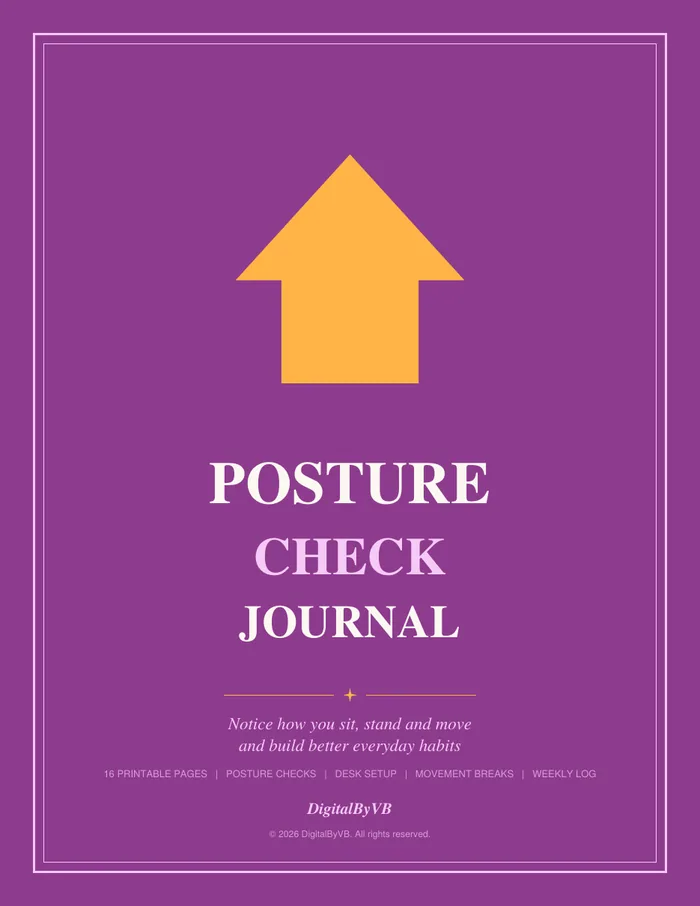
I’ll walk you through realistic ways to use a posture journal printable, from desk setups to planning movement breaks (even if your day’s packed). You don’t need to overhaul your routine or buy new gear. Just a small step to catch those habits before the aches start. If you want a ready-to-print option, check out our Posture Check Journal printable, but you can improvise with any notepad, too.
Why Use a Posture Check Journal Printable?
It sounds simple—almost too simple, right? But actually sitting down with a pen and a posture tracker changes things. I first realized this after a particularly rough week last May: three late nights in a row, glued to my laptop, and by Thursday, my neck was so tight I couldn’t look over my shoulder in the car. That’s when I started scribbling a quick checklist on a sticky note—”shoulders down, feet flat”—and glancing at it every time I checked my email. (I check my email a lot.)
This routine only took a few minutes a day, but I noticed the difference. By the end of the week, I avoided that deep ache I’d come to expect. That’s what a posture journal printable can do: create tiny, repeatable reminders that keep you aware of how you’re sitting, standing, and moving. If you check in three times a day, that’s 15-21 posture check-ins a week—plenty of opportunity to catch habits before they get uncomfortable. Think of it as a low-pressure accountability partner, one you don’t have to impress.
Starting Simple: Daily Posture Check-Ins That Don’t Become a Chore
Let’s talk logistics. If the idea of tracking your posture all day sounds exhausting, you’re not alone. The trick is to make it as easy as possible—almost automatic. For me, three check-ins each workday is the sweet spot. Here’s how it looks in real life:
- First thing: When you sit down in the morning. Maybe jot a one-sentence intention: “Keep feet planted and chin level.” Took me less than 20 seconds each time.
- Midday: Right before or after lunch. Check the boxes on your printable, and write a quick note if you notice tension creeping in. For me, this is usually when I realize I’m sitting on one foot—again.
- End of day: A quick scan as you wrap up. Any patterns? Any part of your body sore or tight? A sentence or two is plenty.
This structure only takes a minute or two but can drastically shift your awareness. And if you prefer, set an alarm for posture check-ins—my phone buzzes at 10:30 and 3:00, which lines up with my energy dips (and my snack cravings).
Planning Movement Breaks: Making the Most of Micro-Movements
Movement breaks don’t have to mean a full workout. Most days, I’m lucky to get five minutes to walk around the block. Instead, use your printable to add three planned breaks—even just stretching at your desk. For example, if you work Monday, Wednesday, and Friday from 8 to 4, block out a 3-minute stretch at 11, a kitchen walk at 2, and a longer break at 4.
One client of mine tapes her posture printable right by her coffee maker. Every refill triggers a glance at the checklist—and a minute of shoulder rolls or a lap around her living room. That’s 15 extra minutes of movement a week she wasn’t getting before. Write these breaks down on your printable, and check them off as you go. Seeing that progress is oddly satisfying.
This isn’t about perfection. Some days you’ll forget a break entirely; others, you’ll add an impromptu yoga pose between Zoom calls. Whatever works. The point is to notice how even small changes—like standing up once an hour—make a difference by Friday.
Desk Setup: Using Your Journal Printable to Pinpoint What Helps
Your workspace setup plays a larger role in posture than you might think. Use a corner of your posture check journal printable to jot down changes. Try listing your monitor height (did you prop it up on books today?), chair adjustments, or notes like “added a pillow for lower back at 1 PM.” Over a week or two, you’ll see what actually makes you more comfortable, and what’s just clutter.
Here’s a real example: One month, I used my journal to tweak my desk setup every Wednesday, noting the difference the next day. Turns out, putting my laptop on a shoebox and adjusting my chair by just an inch made afternoon slouching disappear. Try writing down those details—”screen at eye level, chair at lowest setting”—so you can replicate what works and ditch what doesn’t.
If you hot-desk or work in different spots, this kind of tracking can be especially useful. Maybe you feel better at the kitchen table in the morning, but need a firm chair by late afternoon. Write it down—your body will thank you next week.
Habit Stacking: Pairing Posture Checks With Other Daily Rituals
One of the best ways to make posture check-ins stick is to tie them to something you already do. I call it habit stacking. For example, every time you top off your water glass, glance at your printable. Or check your posture every time you hit “send” on an email. Personally, I keep my posture journal right next to my mouse—I can’t ignore it when I reach for the mouse, so it’s easy to remember a quick check-in.
Other real-world cues:
- After every phone call, check your sitting position.
- When shutting down your computer, scan your body for tension.
- Before lunch, do shoulder rolls while reading over your printable.
These mini habits add up. After two or three weeks, you may find you’re sitting taller even without reminders. That’s a win.
Celebrate the Little Wins: Tracking Progress Without Perfectionism
It’s easy to set lofty goals and then feel bad for not meeting them. But when it comes to posture, every small win matters. Marking a star or sticker on your printable for each day you remember to check your posture can help you notice your progress. Over the past year, I’ve seen my own slouching drop dramatically, mostly because I started enjoying the process—who doesn’t love a lineup of gold stars at the end of the month?
If you’re the data-loving type, tally up your check-ins at the end of the week. Hit 12 out of 15? That’s 80%. Missed a day? No big deal. The goal is awareness, not perfection. And honestly, just noticing you’re slumping is half the battle.
Some people like to pair posture checks with positive notes—”felt better by 2 PM after stretching,” or “back pain less noticeable today.” These small reflections can keep you motivated when life gets hectic and you’re tempted to skip the routine.
Ready-to-Use: What’s in the Posture Check Journal Printable?
If you want something you can print and start right now, the Posture Check Journal printable has all the essentials. For $3.99, you get a clean, uncluttered PDF (both US Letter and A4 sizes). Here’s what you’ll find inside:
- Multiple daily posture check reminders—no need to design your own grid.
- Dedicated spaces for noting your desk setup and any tweaks through the week.
- Movement break sections—perfect for tracking those mini-stretches or two-minute walks between meetings.
The printable is flexible enough to fit whatever schedule you keep. You can tape it to your monitor, slip it into a planner, or keep it by your coffee mug. There are no “wrong” ways to use it—customize as you need, and adjust week by week based on what helps you most.
Step-by-Step: How to Use a Posture Check Journal Printable
- Print your journal. Pick US Letter or A4 to match your printer. Print out several copies to cover a few weeks in advance if you like.
- Choose a visible spot. Stick your printable where you’ll actually see and use it—on your desk, posted on your monitor, or tucked into your daily notebook.
- Select check-in times. Pick 2–4 moments that make sense for your day. Maybe when you log on, before lunch, mid-afternoon, and at wrap-up. If you work variable shifts, set a recurring alarm or calendar reminder.
- Check your posture at each interval. At each check-in, take a short scan: Are your feet flat? Shoulders relaxed? Neck long? Tick the box or jot a quick note.
- Plan your movement breaks. Write down the specific times you’ll stand, stretch, or walk. If you get up unexpectedly—say, to answer the door—count that as a break and note it down. Every bit helps.
- Note any workspace tweaks. If you raise your monitor, add a pillow, or shift chairs, write it in the margins. Next week, you’ll know what helped and what didn’t.
- Review at week’s end. On Friday (or your last workday), scan your notes. Spot patterns: Do you always forget the post-lunch check? Does your neck hurt after certain meetings? Adjust your strategy for the week ahead.
Tips for Making It Stick (Even When Life Gets Busy)
- Pair with daily rituals. Attach posture checks to habits you never skip: water refills, coffee breaks, lunch. The less you have to “remember,” the better.
- Keep the printable in sight. If it drifts to the bottom of your inbox or under a pile of papers, odds are it won’t get used. Visibility is half the battle.
- Don’t stress missed check-ins. Busy day? Didn’t fill it out? That’s normal. Just pick it back up tomorrow. The point is to build awareness, not aim for 100% compliance.
- Track what actually helps. Notice that you feel less stiff after a certain break or desk tweak? Make a note. That’s valuable feedback for future weeks.
- Reward progress. However small. A line of checkmarks, a favorite sticker, or a positive note on Friday can be surprisingly motivating.
Frequently asked questions
How often should I use my posture check journal printable?
Most people find that 2-4 check-ins a day strike the right balance. That’s enough to spot patterns without it feeling like homework. Try setting reminders at times when you tend to slump (for me, 3:00 pm is a danger zone). Adjust if you find you need more—or fewer—prompts as your routine becomes more natural.
Will a posture journal printable actually improve my comfort?
While it can’t fix every ache, a posture check journal printable can help you notice and change habits that contribute to discomfort. By consistently reminding yourself to check posture and take movement breaks, many people notice less tension over a week or two. For long-term or persistent pain, always consult a healthcare professional.
What exactly is included in the printable?
The printable includes daily check-in prompts for posture, sections to track your desk setup, and space to schedule or record movement breaks. It’s a PDF in US Letter and A4 sizes, designed to print at home and use flexibly—nothing overwhelming, just what you need to build steady habits.
What if I stop using the posture journal for a while?
It’s absolutely normal to forget for a few days (or even weeks)—especially during the busiest seasons. When you’re ready, just start again. Keeping your printable visible increases your chances of picking up the habit again without guilt or frustration.
If you’re looking for more smart printables to organize life, health, or routines, visit our full shop page for ideas. However you use your posture journal, here’s to more awareness, a little less stiffness, and a week that feels just a touch more comfortable.
Skip the blank page. Browse the shop for instant downloads.
Browse the shop
Leave a Reply