
Rucking Workout Log Printable: What Actually Matters to Track
What to Track in Your Rucking Workout Log Printable (And What to Ignore)
Ever find yourself halfway through a ruck, knowing you’re putting in the miles, but when someone asks how your training’s going, you realize you aren’t sure if you’re improving? If you’ve tried tracking your workouts in random notebooks, only for those notes to end up buried under grocery lists or lost in the car, you’re not alone. Many people start out with every intention of keeping a detailed log, but the process either gets too complicated or feels too time-consuming. That’s where a simple, purpose-built rucking workout log printable can actually change things for the better: you get a straightforward, consistent way to measure how far you’ve come—and what’s getting in your way. The trick isn’t to jot down every last heartbeat or snack, but to find the sweet spot between enough detail and too much clutter. Your log should be as practical as your rucksack: just the essentials, ready to go whenever you are.
This guide will walk you through what really deserves a spot in your rucking workout log printable, how to set it up for daily use—especially if you have a variable routine—and why you’ll thank yourself six months from now for keeping it simple but steady. We’ll look at real-world entries, troubleshooting blank weeks, the value of small notes, and even some honest pros and cons of printable logs versus digital options.
Why Keep a Rucking Workout Log Printable at All?
If you ruck once a month, you might get by just fine without a dedicated log. But if you’re out two or three days a week—say, Mondays before work and Saturdays with friends—chances are your memory will blur the details. What was your pack weight last Wednesday? Did that new route really feel tougher, or were you just low on sleep?
Start writing things down and patterns appear. For instance, maybe you notice that every third weekend you end up with a sore shoulder if you go above 35 lbs. Or on days when you stick to paved trails, you recover faster—even if you ramp up the distance. A written log gives you hard evidence: not just that you’re showing up, but how your training is changing over time. No guessing, no relying on memory.
Why not just use an app? For some, that works. But a printable puts everything in front of you—at a glance, no scrolling, no passwords, no fuss. And it’s flexible: scribble a quick weather note, circle a PR, or add a smiley for a good day. It’s personal, tactile, and totally under your control.
The Essentials: What You Need to Record (and Why)
When you look at your rucking workout log printable, it shouldn’t feel like a tax form. Here’s what deserves a line, and why each bit matters:
- Date: This is the anchor for your log. If you only have time to record one thing, make it the date. Over time, you’ll see gaps (holidays? off weeks?) that help explain progress or plateaus.
- Pack Weight: Write the total weight you hauled. Even a two-pound bump is worth noting. For example, if you rucked with 25 lbs last Friday and upped it to 30 lbs today, that’s meaningful progress—even if pace slows a bit.
- Distance: Most people use a phone app or basic pedometer. Rucked 2.7 miles one day, 3.4 miles next week? That’s how you spot endurance gains.
- Pace or Total Time: Jot down your minutes per mile or overall session time. Consider sticking with the one that’s easiest for you to measure every time. If you clocked 54 minutes for a three-mile hilly route, you’ll know what to aim for next session.
- Terrain: Terrain often makes or breaks a session. A flat park loop and a rocky two-mile trail won’t feel the same. Simple words—”trail, flat, gravel, stairs”—are enough.
- Small Notes: Did you try a new pair of socks? Was it raining? Did you have a weird ache in your shin? These one-liners turn your log into a troubleshooting tool down the road.
If you keep it pared down to these points, you’ll find it takes less than a minute to update, and you’ll stick with it. Too much detail and it turns into homework. Too little, and it’s easy to lose track of what’s helping or hurting your progress.
What About the Extras? Deciding What Not to Track
There’s no shortage of advice on what to log. Some runners track resting pulse, hydration, shoe mileage, even which playlist was on. With rucking, it’s tempting to go overboard—especially if you’re a data lover. But if you’ve tried keeping a record before and lost steam, here’s the honest truth: most people benefit more from doing less.
Unless you’re prepping for a competition or actively troubleshooting a health issue, tracking calories, exact GPS routes, or your daily water intake often just adds clutter. For example, I’ve seen people log every snack eaten before and after a ruck. Unless you’re testing nutrition strategies for a specific goal, you’ll hardly ever look back at those notes.
Instead, ask yourself: “Will this detail affect what I do next week?” If the answer is no, consider skipping it. Every extra box on your printable can slow you down and sap your enthusiasm. If something really stands out one day—say, a new pair of boots changed everything—just jot it down in your notes section. Otherwise, keep your focus on the basics: distance, time, weight, terrain, and how it felt.
Sample Entry: What a Useful Log Looks Like
Let’s walk through an example. Say you work Monday, Wednesday, and Friday, with Wednesdays reserved for your longest ruck. Here’s what a midweek entry might read:
- Date: 11/18/26
- Pack Weight: 28 lbs
- Distance: 4.3 miles
- Pace: 16:45 min/mile
- Terrain: Local park loop, half paved, half dirt
- Notes: Chilly, light rain, felt energized despite less sleep. Left foot sore at mile 2, faded after new lacing.
That’s it. Short, honest, and most importantly, something you’ll want to look back on. Two months from now, you can compare and see if that new lacing method solved your foot soreness, or if it crops up after longer rucks or colder weather.
Making the Most of a Printable Log: Product Features and Practical Tips
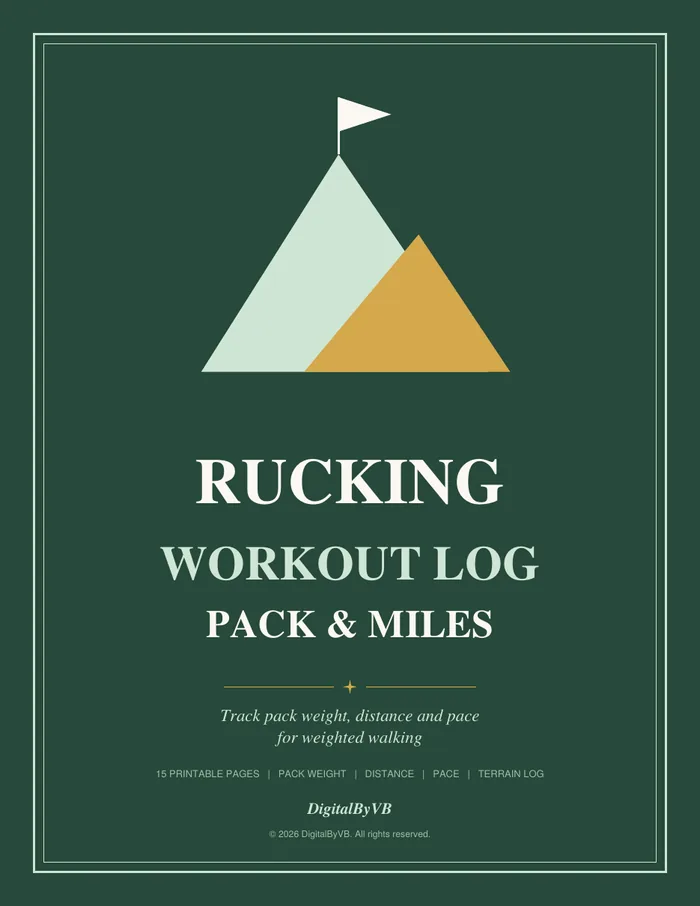
If you’re looking for something easy to use week in and week out, the DigitalByVB Rucking Workout Log Printable keeps things simple by design. It’s a PDF ready for instant download—no software, no accounts, no waiting for shipping. You’ll find dedicated spaces for the essentials: date, pack weight, distance, pace, and terrain. Everything’s laid out in clear rows so you don’t have to squeeze in notes or flip pages to compare old sessions.
It prints neatly on standard US Letter or A4 paper. At $3.99, it’s a low-stress investment—even if you misplace a sheet, you can just print another. I recommend keeping a stack of blank logs in a folder near your gear, or tucked inside your gym bag. Some people like to use a clipboard; others file sheets in a basic binder by month. Do what fits your habits.
You won’t find unnecessary fields or distracting graphics—just the basics that help you spot progress without distraction. If you like to record other details, the notes section is roomy enough for a few thoughts after each ruck. For families or roommates who ruck together, print multiple copies and compare progress—it’s motivating to see those sheets start to fill up.
Step-by-Step: How to Use Your Rucking Workout Log Printable
- Print Your Log Sheets: Use standard letter or A4 paper for best results. Print 10–15 copies at once so you’re set for a month or more, depending on your frequency.
- Pre-Session Prep: Before heading out, take a minute to fill in the date, pack weight (including water, if you always carry the same amount), and your planned route or target distance.
- Post-Ruck Update: Right after finishing—while you’re cooling down—log your actual distance and time or pace. Don’t worry about decimal places if you’re rounding; accuracy within a quarter mile or a minute is usually fine.
- Describe Terrain:** Simple words are enough: “trail,” “hills,” “paved,” “gravel.” If your route is mixed, note which parts were hardest.
- Make a Note or Two: Did you change your shoes, test a new hydration vest, or was it especially windy? Include it here. Details pay off when trends appear later.
- Store Your Sheet Safely: Place the page in a folder, binder, or clipboard. If you’re likely to be sweaty or caught in the rain, tuck it in a plastic sleeve.
- Regular Review: Once every couple of weeks, flip through your completed sheets. Are you consistently increasing distance or weight? Does pace drop when you switch to hills? Patterns matter.
- Update as Needed: If you realize you consistently need another line (maybe for stride notes or weather), add it to the notes section or jot it on the back.
Troubleshooting Missed Days or Logging Slumps
Everyone hits a patch where logging falls by the wayside—travel, illness, or weeks when motivation dips. If you miss a few days, don’t stress. Just start again the next time you ruck. It’s better to have a handful of honest, accurate entries than a backlog of best guesses. Say you go a whole week without logging, but you know you went out Saturday morning with a 32lb pack for an hour—jot that down from memory. Even partial info is better than nothing.
If your log has blank spots, use them as a reset point. Maybe something in your routine needs to change—a new walking partner, earlier mornings, or simply accepting that a busy season will have fewer sessions. The sheet isn’t there to judge you; it’s there to help you pick up where you left off.
How to Read Your Progress in a Rucking Log
Numbers on a page don’t mean much unless you know what to look for. Set aside ten minutes at the end of each month to compare your last four weeks. Did you gradually add weight? Are your average distances holding steady, or creeping upward? If you record pace, is it dropping as you get stronger, even when you stick to the same terrain?
Concrete example: if you started October with three-mile rucks at 18:30 min/mile, and by mid-November you’re up to four miles at 17:45 min/mile, that’s progress—even if your overall time is longer. Or, maybe you notice every Friday ruck is shorter and slower than Tuesday. Perhaps that’s a day to lighten the pack or make it a recovery session. The log lets you play detective, not just passenger, in your own training.
Don’t ignore the notes, either. Trends like “left knee aches after gravel” or “extra energy after pre-ruck banana” can be the difference between a sustainable routine and recurring frustration.
Smart Printing and Storage: Small Habits That Help
Printing your rucking workout log printable might not sound like a big help, but the details do matter. Here are a few tips that make it easier to stick with the habit—not lose pages or smudge all your notes:
- Set your printer to “actual size” rather than “fit to page”; otherwise, the writing boxes can shrink or distort.
- Print a handful of sheets at once and keep extras physically near your rucking shoes or pack. Out of sight often means out of mind.
- Use a pencil or erasable pen. Mistakes happen, and you might change your route or adjust pack weight mid-walk.
- Slide each used log into a clear plastic sleeve to protect from sweat or rain if you update outdoors.
- If you ruck with a partner, print double-sided sheets and compare each week for a bit of friendly accountability.
- Keep a backup PDF in your email or cloud drive in case you need more copies when away from home.
Remember, your system doesn’t have to be perfect. It just has to be easy enough that you’ll actually use it.
Frequently asked questions
How often should I fill out my rucking workout log printable?
For best results, update your log right after every ruck—while details are fresh. If you miss a session or two, add a quick summary from memory or leave the space blank. Consistency over time matters more than perfect records every single day.
What if I forget my route distance or session time?
Don’t sweat it—estimate based on your usual route or use average times if you have them. One or two missing data points won’t erase your overall progress. Next time, make it a habit to check your phone or watch before you sit down to log.
Do I need fancy storage or equipment for my printable log?
No special gear needed. An old folder, an inexpensive binder, or even a sturdy clipboard works. The best system is whichever keeps your log close to your rucking gear and easy to glance over each week.
How much space should I leave for notes in my rucking workout log printable?
Just a few lines per session is usually enough. A sentence or two about what stood out, any physical issues, or new gear used gives you context later. If you find yourself running out of room, you can always write on the back or add sticky notes.
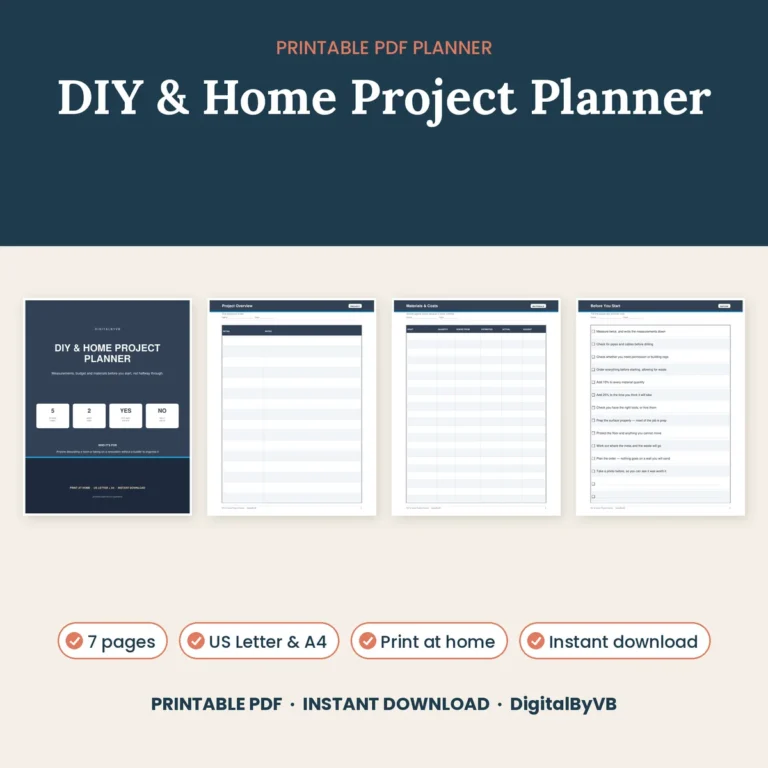
Want more printables—whether it’s for fitness, planning, or getting your home routines in order? Browse the DigitalByVB shop for plenty of printable options you can start using today.
Skip the blank page. Browse the shop for instant downloads.
Browse the shop

Leave a Reply