
Sleep Tracker Printable: The Practical Guide to Paper Sleep Logs
Ever wake up groggy, check the clock, and wonder if you actually slept at all? Maybe you’re juggling work, family, or school, and every day feels like guesswork about your sleep. Or perhaps your doctor has asked you to bring in a sleep diary, and you’re staring at a blank page, thinking, “What do I even write down?” This is where a sleep tracker printable can genuinely make things easier. No need to download an app, wear a gadget overnight, or fuss with blue screens in the dark. You just print a single page, grab a pen, and start jotting down your nights — in your own handwriting, on your own schedule. It’s surprisingly insightful, even if you keep it simple. Over a few weeks, you’ll start to see patterns: the rough nights after late meetings, the rare mornings you wake up refreshed, or how an afternoon coffee lingers longer than you realized. If you’ve never tried tracking your sleep before, it can feel a bit old-fashioned at first. But there’s a reason doctors often ask for a paper log — it puts the full picture right in your hands, and you don’t need to learn any new tech.
Why Use a Sleep Tracker Printable Instead of Guessing?
I’ll admit it — for years, I thought I could remember my own sleep patterns. But when my doctor asked what time I usually went to bed, or how many nights a week I woke up at 3am, I couldn’t give a straight answer; everything sort of blurred together. That’s true for most people. We overestimate sleep, forget those stretches of wakefulness, and can’t recall what we ate two nights ago, let alone a month of bedtime details.
A sleep tracker printable simplifies all that. You just note down your bedtime, wake time, and any oddities in a little grid — and there it is, the whole month at a glance. This is the paperwork most doctors will want anyway if you ever bring up insomnia, restless sleep, or early-morning grogginess. It’s quick to fill out, discreet (no beeping phones on the nightstand), and you’ll be amazed at the patterns you notice. For instance, I spotted that my worst sleep happened on Mondays after my Sunday “catch-up” nap — something I’d never have guessed.
What to Track on Your Sleep Log (and Why It Matters)
A good printable sleep log isn’t just a calendar with boxes. The basics to record are:
- Bedtime and wake time: Aim for accuracy to the nearest 15 minutes. If you get into bed at 10:45pm but don’t fall asleep until midnight, just write the time you got in, then note the delay.
- How you felt in the morning: Some days it’s ‘okay’, some days it’s ‘exhausted’, and once in a while, you’ll mark ‘refreshed’.
- Interruptions: If you were up with a child at 2am, or the neighbor’s dog barked at 4, jot it down. After a few weeks, those clicks add up — and you might realize you’re not imagining your sleep disruptions.
- “What Affects Sleep” notes: This is where you log anything out of the ordinary: stress, caffeine, a late meal, TV or phone time, exercise, even room temperature.
- Sleep Hygiene habits: Many printables, including the DigitalByVB Sleep Tracker Printable, include small checkboxes for habits like keeping a consistent bedtime, limiting caffeine after lunch, or avoiding screens before bed. You don’t have to check every box every day — just noting what you did (or didn’t do) helps reveal patterns.
The point isn’t to fill in every space perfectly. You’re just trying to build a real-world snapshot of your nights. Even jotting down partial notes most days is far better than nothing.
Picking the Right Sleep Tracker Printable for You
Not all paper trackers are created equal. Some look stylish but have almost no writing space; others cram so many prompts in that filling them out starts to feel like a chore. So, what should you look for?
- One row per day: You want room for every single day, ideally 30 or 31 so you don’t forget about weekends. With the DigitalByVB sheet, you get a clear, undated monthly grid, so you can use it any time of year — pick it up in November, March, or right now, and just fill in your own dates.
- Space for quick notes: Sometimes, a single word (“wine,” “rain,” “stress”) is all it takes to remember why you tossed and turned. If you’re prone to lots of midnight interruptions (hello, shift workers or parents), space for a few extra notes can help make sense of a rough patch.
- Checklists or reminders: A couple of checkboxes for ‘no caffeine after noon’ or ‘in bed by 10pm’ helps keep good sleep hygiene front of mind without nagging.
- Easy to print: PDFs in both US Letter and A4 mean you don’t need to mess around with resizing or margins. The DigitalByVB printable goes straight from download to printer, and one page lasts a whole month.
Try not to overcomplicate it. The best tracker is the one you’ll actually use. A clean, focused design makes it easier to stick with, and you’ll be less likely to abandon the log halfway through the month.
Step-by-Step: How to Start Using a Sleep Tracker Printable
- Print out your sleep tracker for the month. Download the PDF — the DigitalByVB Sleep Tracker Printable is a great option — and print one copy. If you’re a family, print one for each person who wants to track their sleep.
- Place it somewhere visible at home. Tape it to your nightstand, put it on your fridge, or slide it inside your daily planner. The easier it is to see, the less likely you’ll forget to fill it in. If mornings are hectic, try keeping it by your toothbrush or coffee maker — right where you’ll see it as part of your morning routine.
- Write down your bedtime each night. Don’t worry about being exact — “10:30 pm” or “a bit after 10” is enough. If you get distracted by reading in bed or scrolling your phone, make a note if you remember.
- Log your wake-up time and morning feeling. Did you wake up rested, tired, or somewhere in between? A quick word or even a rating out of five is enough. Note any overnight wake-ups too.
- Use the ‘What Affects Sleep’ section. Jot down anything that might have an effect: “coffee at 7pm”, “late dinner”, “stressful work email at 9”, “kids up at 2am”, “slept with window open.”
- Tick off sleep hygiene boxes if your tracker has them. Did you keep lights low? Avoid caffeine after lunch? Skip TV in bed? Check the box if you did, leave it blank if not. Don’t stress — a missed box is just information, not a failure.
- At the end of each week, read back over your log. Are there recurring patterns? Do Friday nights always run late, or does Sunday sleep always feel restless? Make a mental (or physical) note — sometimes the biggest insights come from this weekly review, not from any single night.
- Keep going all month. Don’t let a missed day or two stop you. If you forget to fill it in, just start again the next night. The point is to see the big picture, not to be perfect.
What (and How Much) Should You Write in the ‘What Affects Sleep’ Section?
This section can reveal more than you expect, even with short notes. You don’t need an essay — in fact, two or three words is often enough. Here’s how a few examples might look over a week:
- Monday: “Late meeting, coffee 4pm”
- Tuesday: “Yoga after 8pm, slept well”
- Wednesday: “Watched TV in bed, trouble falling asleep”
- Thursday: “Wine with dinner, woke at 2am”
- Friday: “Pizza, heavy meal, heartburn”
- Saturday: “Kids sleepover, up at 1am”
- Sunday: “No exercise, tense about Monday”
When you scan your log, you may see the same phrase pop up before restless nights, like “caffeine late” or “screen time.” Maybe every Thursday is off because of a recurring late class or club meeting. The point isn’t to police yourself, but to have honest information. If you notice that skipping your evening walk always leads to hard nights, there’s your clue.
Why Many People Prefer Paper Sleep Logs to Apps or Gadgets
There’s no shortage of sleep apps or wearable trackers, but a sleep tracker printable has concrete advantages. First, there’s no battery to charge and no fiddling with Bluetooth connections. Second, you control the context — you can write notes only you’ll understand (“cat woke me up” or “windy night”), and you won’t have notifications pinging you at bedtime.
Paper tracking offers a birds-eye view of the month. With an app, you’re often stuck scrolling day by day, making it harder to spot trends. With paper, you can see, for instance, that every Tuesday is a struggle, or that every third night is interrupted — patterns that matter if you’re preparing for a doctor’s visit. Plus, some people appreciate that using paper means no late-night screen exposure, which is sometimes a sleep disruptor all by itself.
Building a Realistic Sleep Tracking Habit (That Sticks)
Habits form most easily when you attach them to something you already do. If you brush your teeth every night, keep your tracker and pen next to your toothpaste. Or, if you check your planner each morning with your coffee, put your sleep log right there. For families, keep everyone’s sheet on a shared clipboard or magnetic board on the fridge — it’s a conversation starter and accountability check in one.
It’s also fine if you miss a few days. Life interferes: maybe you travel, or you’re up late with a sick child, or you just forget. Just pick up where you left off. One trick I use: a sticky note reminder on my lamp for the first week. After that, it usually becomes routine. If you like checklists, fill in your sleep log right after writing your to-do list for the next day — another healthy wind-down ritual.
Interpreting Your Month of Sleep Data: What to Look For
After your sheet is full (even if some days are blank), spend ten minutes looking it over. Lay it out on the kitchen table or take a picture for your doctor. Look for:
- Recurring rough nights: Is there a weekday when your sleep is cut short? For example, maybe every Wednesday is a late night after choir practice or an evening class.
- “Good sleep” streaks: Did things improve after you started walking in the evenings? Or got worse during a stressful work project?
- Outliers: Was there a night you barely slept but didn’t record any disruptions? Those are worth discussing with your doctor — sometimes there’s a hidden cause.
- Habit links: Does late caffeine, a skipped meal, or using your phone in bed show up before your hardest nights?
If you’re sharing the info with a healthcare provider, you can simply bring the sheet or take a photo to email. They’ll appreciate seeing a month’s worth of data, and you might be surprised at their observations. Sometimes, little tweaks — like moving your evening snack earlier, or having a set bedtime, even on weekends — can make a big difference over time.
Where to Find a Sleep Tracker Printable That Fits Real Life
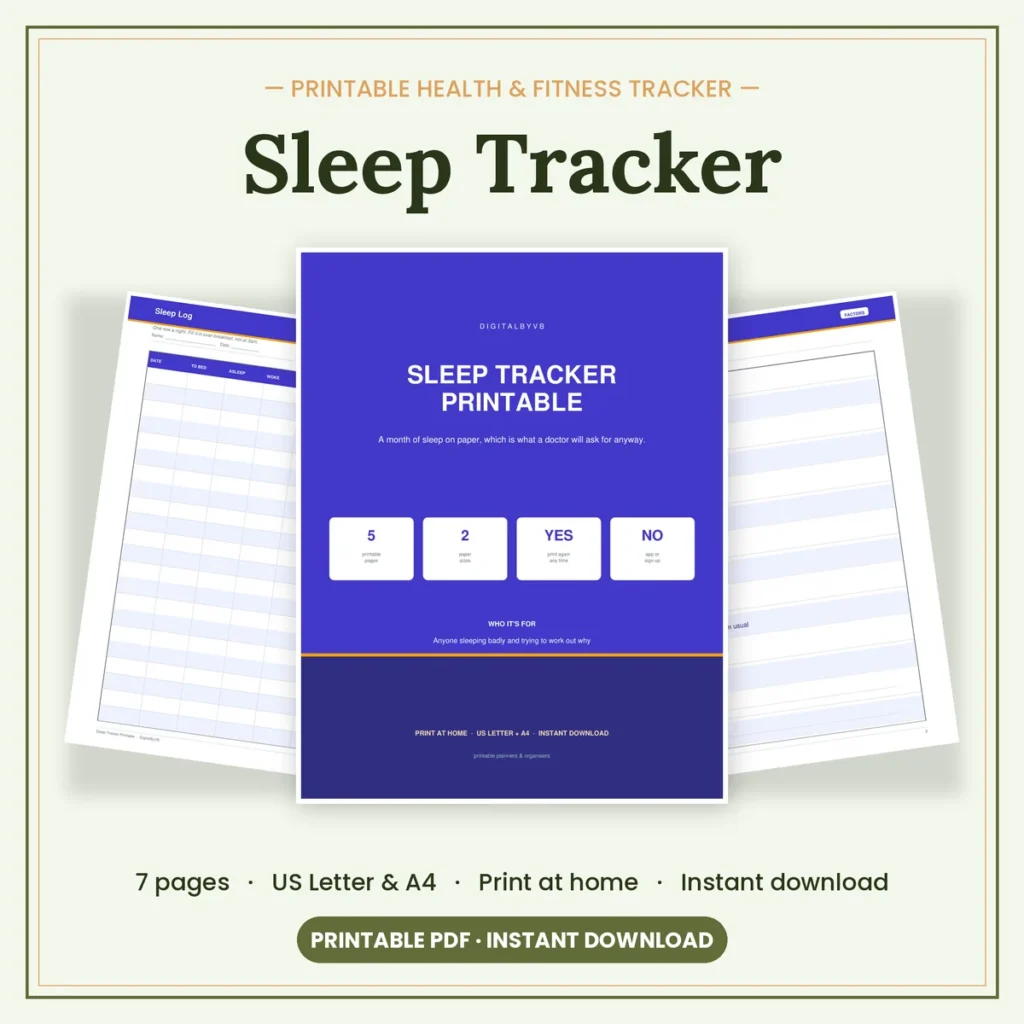
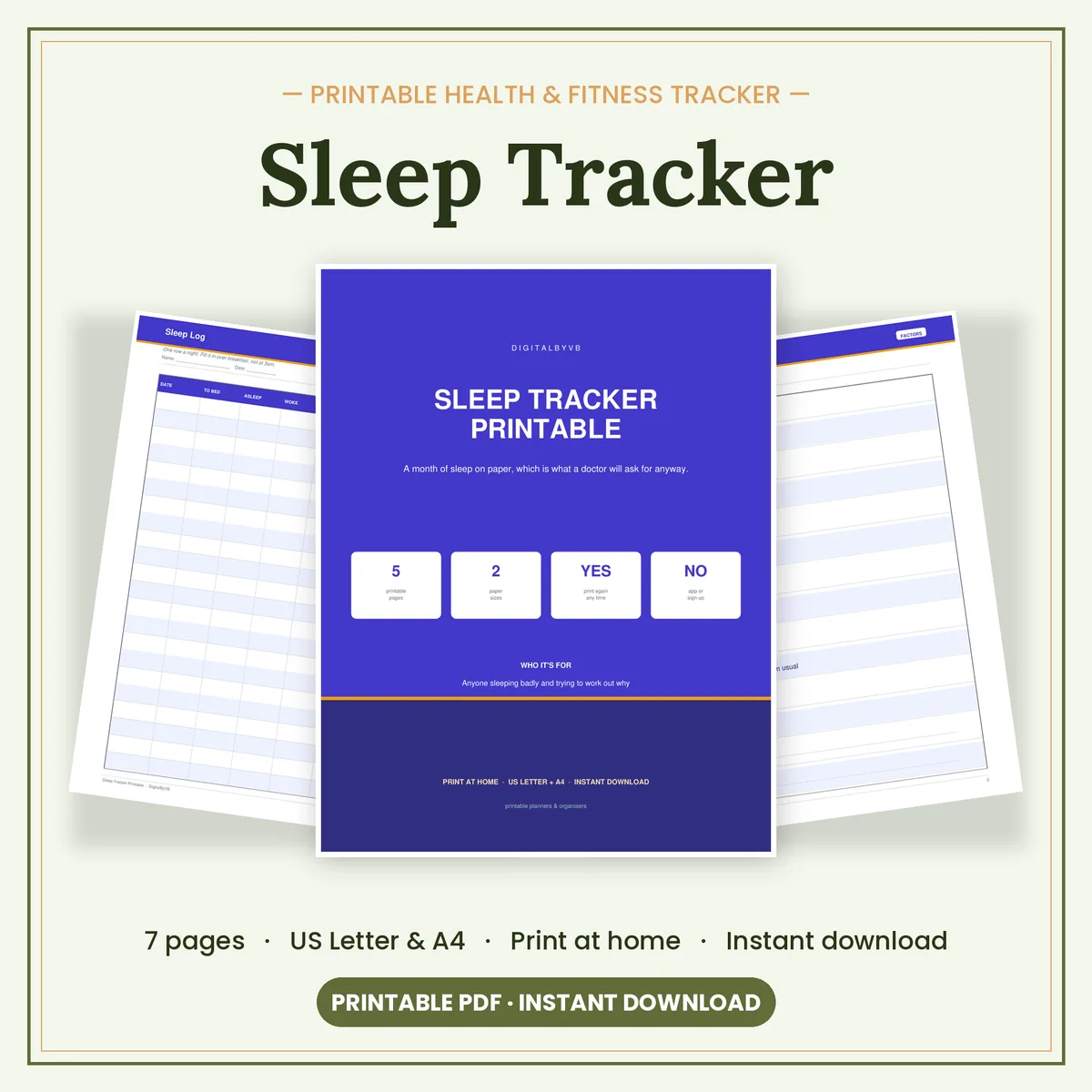
If you’re ready to try a paper log, or maybe you need a no-fuss sheet for a doctor’s visit, the DigitalByVB Sleep Tracker Printable is made for just this purpose. It gives you room for a full month of notes, includes “What Affects Sleep” and “Sleep Hygiene” sections, and downloads instantly as a PDF in both US Letter and A4. It’s $3.49 — less than a cup of coffee — and you can print as many copies as you need (for yourself or anyone else in your household).
For a closer look at other planner and health-tracking sheets, from meal planners to weekly check-ins, browse the full DigitalByVB shop.
Frequently asked questions
How detailed should my sleep tracking notes be?
Keep your notes brief and focused. Write your bedtime and wake-up time, and add a quick word or phrase for anything out of the ordinary — like “late coffee,” “storm,” or “TV in bed.” You don’t need long sentences. A few words are enough to spot what’s affecting your sleep.
Can I start my sleep tracker printable mid-month, or do I have to wait?
There’s no need to wait for the 1st. Start any day you like — just fill in the date. If you skip days or start mid-way through the month, you can leave those boxes blank. The goal is insight, not a perfect calendar.
How does a sleep tracker printable compare with using an app?
Paper lets you write real context — not just numbers, but notes on what happened that night. You won’t be tempted by screens at bedtime, and you can share your log easily with a doctor. Apps can offer automatic data and charts, but many people find they stick with paper tracking longer.
What should I do if I skip a few nights or forget to log?
No problem. Just resume when you remember. A few blank days won’t ruin your overall picture. The most useful information comes from week-by-week patterns, not daily perfection.
If you’re ready to print your own sleep tracker, or want to explore more printable planners for health, daily routines, and beyond, you’ll find a range of practical, easy-to-use templates at DigitalByVB.
Skip the blank page. Browse the shop for instant downloads.
Browse the shop
Leave a Reply