
Mindful Eating Journal Printable vs. Notes App: What Works?
Mindful Eating Journal Printable: A Pause in a Digital World
Have you ever finished lunch and realized you barely tasted it? Maybe you meant to savor each bite but found yourself scrolling through emails, checking notifications, or—let’s be honest—watching a cat video. If you try logging your meals in a notes app, all it takes is a single ping and suddenly you’re knee-deep in social media or work messages. It’s easy to lose track. That’s where a mindful eating journal printable offers something quiet and rare: a gentle pause. There’s no glow, no tabs, no pop-ups—just paper and pen. It sits patiently in the real world, ready whenever you are. That small shift is more powerful than you might expect.
Why a Mindful Eating Journal Printable Beats a Notes App for Focus
Phones do everything. They help us shop, work, connect, and remember. But here’s the catch: even when you open your notes app with the best intentions, it can take just seconds to get swept away by other apps. I tried keeping food reflections on my phone once and found myself, five minutes later, adding paper towels to my shopping list or reading a news alert. Real-life example: a friend told me she opened her phone after dinner to write how she felt after her meal—and fifteen minutes later, was looking up movie times instead, her reflection forgotten.
Writing by hand slows things down. It’s messier, sure, but that’s part of its magic. You can jot, doodle, scribble a word or two. There’s no autocorrect, no suggestions—just you and the page. Research aside, most of us notice we remember things longer when we write them out. A written note about being hungrier on Mondays (maybe you walk the dog further!) is easier to revisit when it’s staring up from a page at breakfast. Unlike a note buried on your phone, a printed journal can sit on your kitchen counter, a subtle nudge to pause and check in.
What Is a Mindful Eating Journal Printable, Really?
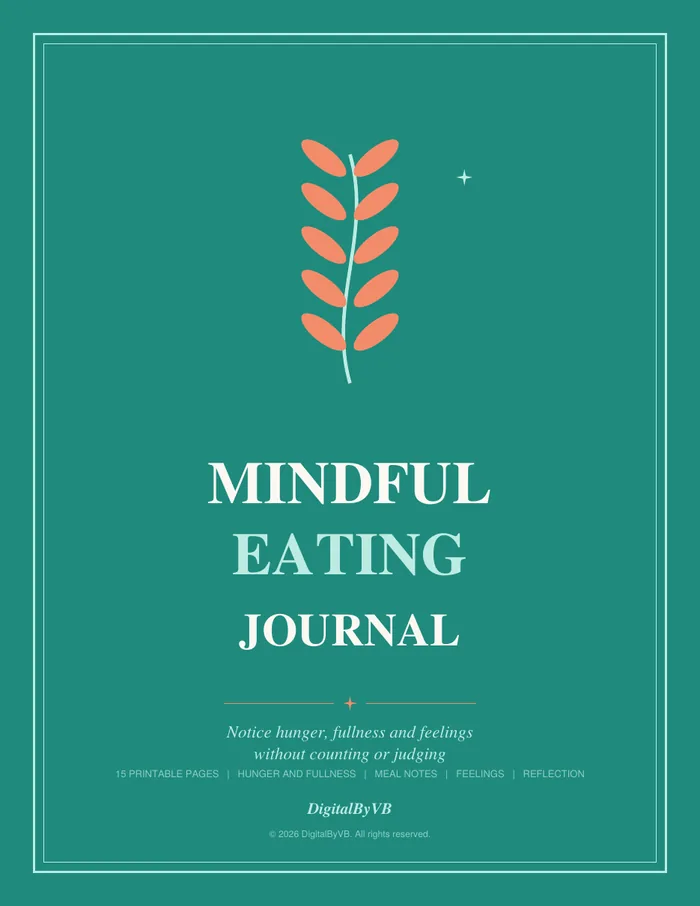
So, what exactly do you get if you choose a mindful eating journal printable over an app? It isn’t a calorie log or a list of diet rules. Instead, it’s a paper tool that prompts you to notice hunger, fullness, and your feelings around food—before and after meals. You get a printable PDF with guided questions and space to jot quick thoughts. Maybe you print a week’s worth and slip them in a binder, or just stick a single page to the fridge. You decide how to use it. Our Mindful Eating Journal printable offers a simple daily layout: room for what you ate, how you felt, whether you were truly hungry, and anything else the moment brings up. The focus is on reflection, not judgment.
No one else needs to see it. No calorie counting, no food guilt—just honest check-ins with yourself. If you’re a morning person, you might fill it out with your coffee; if evenings are calmer, give yourself five minutes after dinner to write. The printable format makes it yours to customize, and if you prefer, you can print extras or just one page at a time. It’s your pace, your way.
When to Use a Notes App (and When Paper Makes More Sense)
Is there ever a place for a notes app? Sure. If you’re always out and about, or your phone is your one constant companion, jotting a thought in an app can be handy. Maybe you’re running late to a lunch meeting and want to note a quick mood or hunger cue—your phone is right there. But notice the difference when you get home. If you have a mindful eating journal printable sitting on the kitchen table, it’s much easier to pause, reflect, and notice lingering feelings about the meal. Say you work Monday, Wednesday, and Friday at home, but are in the office on Tuesdays and Thursdays. On office days, you might jot a note in your app. But for most people, the act of sitting down—even for two minutes—with a real page creates a ritual.
Physical journals invite you to look back. On Sunday, you might flip through pages and see patterns: “Mondays I eat earlier when I’m anxious about the week” or “Fridays I barely notice lunch because I’m in back-to-back meetings.” That pattern-spotting is harder with digital notes lost among lists and reminders. Also, there’s just something surprisingly satisfying about seeing a stack of completed reflection pages grow week after week.
How to Start Using a Mindful Eating Journal Printable: Step-by-Step
- Pick the right printable journal. Choose a format that feels inviting, not overwhelming. The Mindful Eating Journal printable from our shop keeps prompts simple and open-ended—you won’t find calorie columns or food rules. This makes starting less intimidating and more personal.
- Print out at least seven pages. You might want a full week’s worth, or even just three if you prefer to ease in. Choose US Letter or A4, depending on your printer. Have a hole punch handy if you like keeping things in a binder, or use a clipboard for a portable option. Some people like to print two-sided to save paper.
- Decide on a visible spot. Where do you usually eat? Place the journal near your kitchen table, on your counter, or even next to your lunch bag. The more visible it is, the more likely you’ll use it. If mornings are busy, consider taping a sheet near the coffeemaker. If lunches happen at work, tuck a page in your planner or folder.
- Start with small, honest notes—before and after eating. Before a meal, jot down how hungry you are (on a scale from 1-10, if that’s helpful), your mood, and any expectations. After you finish, note fullness, satisfaction, and anything about the experience: Did you eat quickly? Did you feel distracted? Maybe just a word or two: “Tired,” “satisfied,” or “ate with friends—felt good.” Little is enough.
- End each day with a gentle review. At night, look at your notes. Are there surprises? Maybe you ate out of habit at 4 p.m., or realized dinner was rushed. Jot additional reflections, or circle patterns you notice. It’s not about changing everything at once, but gently bringing awareness to the edges of your routines.
- Repeat, but don’t chase perfection. Miss a day? Forget a meal? That’s normal. Skip ahead, or just pick up where you left off. The habit will settle in as you find what works for your own rhythm.
- Week’s end: review and adapt. On Saturday or Sunday, look over the week’s entries. Any themes? Maybe lunch is always late on Wednesdays, or you’re never truly hungry for breakfast. Take a sticky note and write a small intention for next week—something easy, like “Pause before eating” or “Try one new snack.”
- Archive or recycle old pages as you go. Some people like keeping past pages to look for long-term patterns; others prefer to toss them after a week. Do what feels comfortable for your privacy and space.
Tips for Making Paper Journaling a Real Habit (Not a Chore)
- Pair journaling with another habit. If you always have tea, coffee, or water with a meal, put your journal and pen next to your favorite mug. It’s easier to remember when it’s already part of your routine.
- Keep supplies simple and inviting. Use a favorite pen, or even a colored marker. Some people like to use stickers or washi tape to make the page feel less clinical. Doodling a sun or a quick smiley face can make the habit less rigid—and more yours.
- Make it visible. Tape a page to your fridge, or tuck it under your dinner plate if you eat at the table. If you’re a desk eater, attach a page to your monitor with a sticky note.
- Let go of pressure. Write what you feel, in as few or as many words as you want. If all you can muster is “tired—ate fast,” that’s perfectly good. This isn’t a homework assignment.
- Review on your own schedule. Some like Sundays; others check in every few days. Even a brief glance at past pages can reveal patterns you’d otherwise miss.
- Don’t punish yourself for skipped days. Life gets busy. If you forget, just start again next meal. The point is noticing, not tracking perfectly.
Inside the DigitalByVB Mindful Eating Journal Printable: What You Get
Curious what’s included with the Mindful Eating Journal printable? For $3.99, you receive an instant PDF download, ready to print at home in US Letter or A4. Each page guides you through a gentle check-in with hunger and fullness before and after eating. There are open spaces for mood, environment, and notes—no calorie counts or food-fixing charts. You can print as many pages as you need: keep a week in your planner or print an entire month for your binder.
What sets it apart? There’s no pressure to diet or log every bite. It’s designed to help you notice the why behind your eating: Are you bored, stressed, genuinely hungry, or just following routine? The structure is enough to guide you, but loose enough to adapt. You’ll find plenty of room for brief thoughts—sometimes a single line, sometimes a paragraph. Many customers use the printable for months, enjoying the freedom to skip days or add creative touches. The main point is to build your mindful eating muscle, one page at a time.
How Paper Journaling Helps You Notice Patterns (Real-Life Scenarios)
Let’s picture a regular week in November. It’s Monday, and you’re working from home. You have breakfast at your desk, answering emails while eating oatmeal. Later, reflecting in your journal, you realize you barely tasted the food—your entry reads, “Distracted—wasn’t hungry but ate anyway.” That small awareness might prompt you to change up your Tuesday breakfast routine. Maybe you try eating at the table, just once, and note: “Slowed down—felt fuller, enjoyed the quiet.” The journal helps you compare those mornings and see what fits.
Or imagine you always crave sweets after a certain meeting every Thursday. You jot down: “Team call left me frazzled—ate two cookies after.” That’s not a moral failing; it’s a clue about stress and comfort. Noticing it on paper makes it easier to experiment: “Next week, try a walk after the call.” Over time, you’ll see patterns: perhaps you eat more when you’re working late, or feel unsatisfied after dining with the TV on. This awareness is more meaningful than any calorie log—because it’s your experience, in your words. The process is private, nonjudgmental, and gentle. That’s where the real change begins.
Can You Combine Digital and Paper? How to Blend Methods
Some people find their balance using both. Say you’re out at a restaurant and want to capture a quick note on your phone (“Felt full halfway through—kept eating anyway”). Later, when you’re home, you can transfer that to your paper journal or reflect further in your own words. Or maybe you snap a photo of your filled-out page so you have a backup if you’re traveling. Another practical tip: You might want to review long-term trends by creating a simple spreadsheet based on your paper entries every month or two. But if you’re trying to build your mindful eating practice away from screens, printed pages are an excellent starting point. There’s less temptation to multitask, and the act of writing is grounding. For most, starting with a mindful eating journal printable helps build sustainable habits, with digital as backup—not the main stage.
Frequently asked questions
How is a mindful eating journal printable different from a food diary?
A food diary usually tracks every bite you eat, often with calories or nutritional breakdowns. The mindful eating journal printable, by contrast, asks you to pay attention to how you feel—your hunger levels, fullness, mood, and thoughts before and after eating. It’s about understanding your relationship with food, not monitoring intake.
Do I have to fill out every meal and every day for it to work?
No, you don’t need to use the printable journal for every meal. Many people start by picking just one meal a day, or even a few times a week. Consistency helps, but the goal is awareness, not perfection or pressure. Even occasional reflection can make a difference over time.
Can I use the mindful eating journal printable if I don’t want to diet?
Absolutely. This tool isn’t a diet tracker and doesn’t ask you to restrict or count. It’s designed for personal reflection only—no calorie counting, no food rules, and no judgment. Use it to explore your feelings and patterns with eating, whatever your goals are.
What sizes and formats does the mindful eating journal printable come in?
Our printable comes in both US Letter and A4 sizes, delivered as a high-quality PDF for instant download. You can print at home, at work, or a local shop, and keep the pages in a binder, folder, or even loose on the counter—whatever fits your lifestyle.
If you’re looking to build a healthier relationship with food—or just notice your eating patterns more kindly—you’ll find more reflection tools at our printable planner shop. Mindful eating doesn’t need to be perfect or high-tech. Sometimes all it takes is a page, a pen, and an honest moment with yourself.
Skip the blank page. Browse the shop for instant downloads.
Browse the shop
Leave a Reply